Breakwater ASOC

Agentic AI Security Operations Center.

Security for connected operations.

Connect asset, software and cryptographic evidence across IT, IoT and OT. Investigate with AI, rehearse response options and keep humans in control of operational change.

ITIoTOTPost-quantum readiness
ASOC / Connected workflowIT / IoT / OT / PQC

Explore the ASOC workflow.

Select a stage to explore the workflow.

01 / Discover

See where exposure can reach.

Connect assets and relationships to identify candidate attack paths into critical operations.

Assets / Connectivity / Exposure
Platform architecture

How ASOC connects
your security operations.

Explore how each product contributes to the investigation. Select a product to highlight its context and see the evidence it brings to the next decision.

Your environment

ITIoTOTSoftwareCryptography

Shared investigation context

EvidenceAsset relationshipsSource & revisionOwnership & review history

Operational controls

  • Permissions
  • Human authorization
  • Recovery planning
  • Outcome verification

Connect products through agreed asset, service and repository mappings, supported integrations and named owners.

Breakwater Discover

Start with the connected environment.

Relate assets and observed connections to a critical service. Identify candidate attack paths and compare modeled interventions.

Context in
Asset identities, connectivity and exposure observations.
Contribution to the decision
Operational context, candidate paths and rehearsal assumptions.
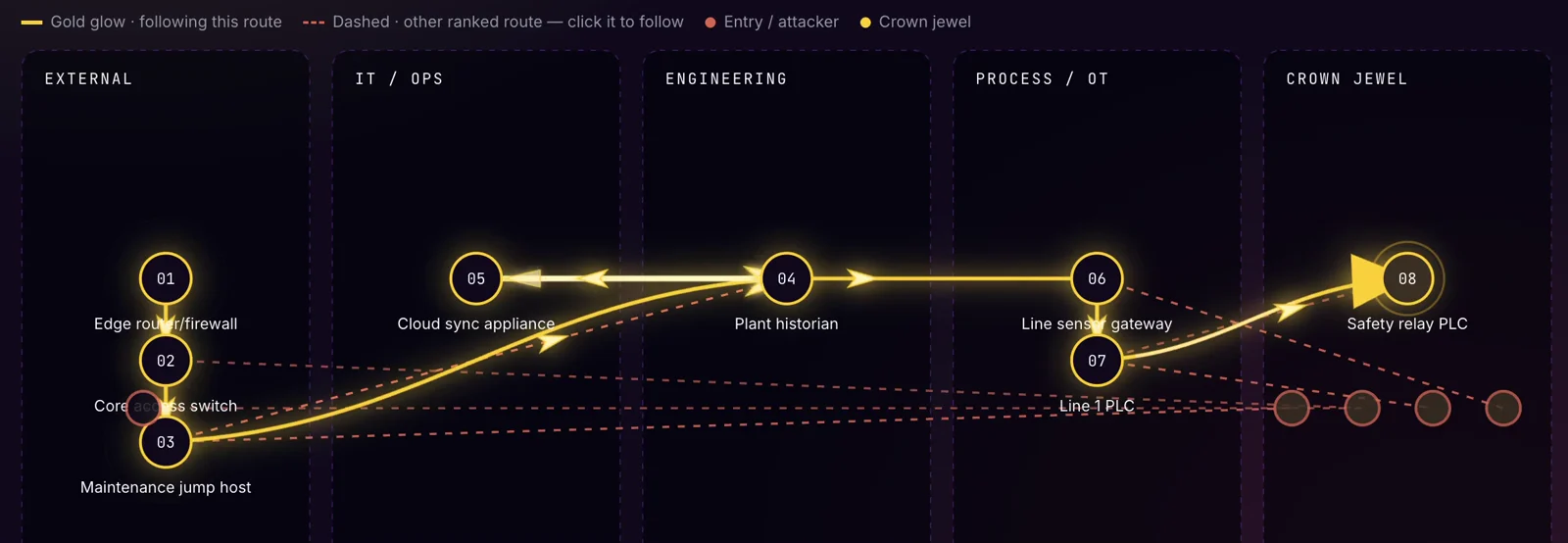
Discover / Attack-path context
A candidate route across connected IT and operational systems.
Explore Discover →
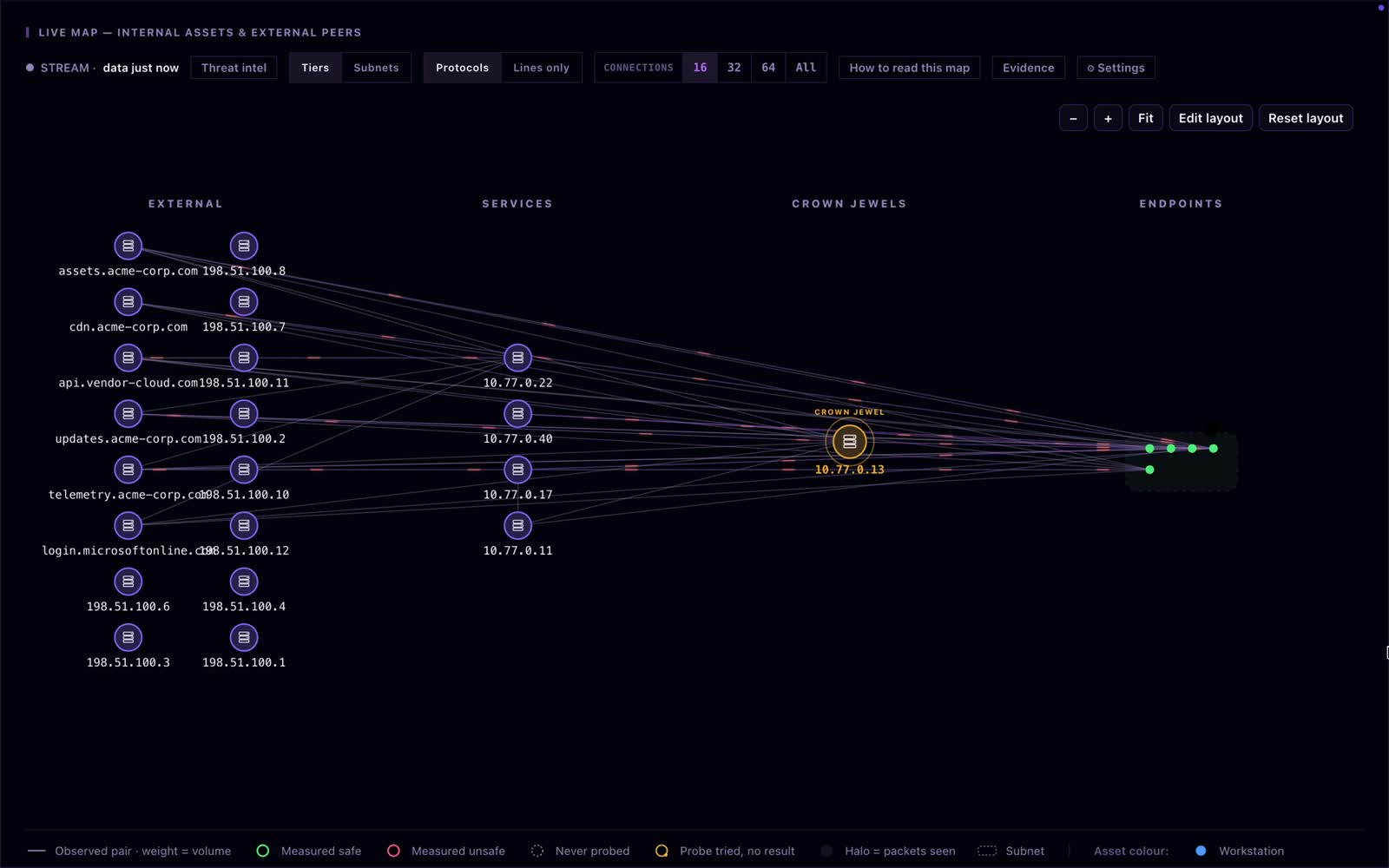
Observed network context / Measured cryptographic evidence

Ground the investigation
in observed connections.

See observed asset–peer relationships, packet counts and cryptographic probe results. Distinguish measured evidence from inferred groupings and gaps in visibility.

Explore the observed network view
Explore the observed network view0:25 / Product walkthrough
How to read this view

What is observed

  • Packet counts per IP come from the top-N aggregates.
  • A line between an asset and a peer is shown only when the learner observed that pair together (service_edges).
  • A probe-result ring on an asset represents an actual ssh -vv key-exchange measurement.

What is inferred

  • Peers are grouped by /24 subnet. An individual bad address can be hidden within a group; an address named by a detection is pulled out and pinned individually.
  • “Known infrastructure” comes from a built-in list, rather than an observation.
  • A dotted ring with “?” means the asset has never been probed; it does not mean unsafe. Probe results match assets by literal IP, so a result recorded under a hostname still appears as never probed in this view.

What is never shown

  • An external-peer-to-asset relationship without an observed pair, traffic direction, or raw packets and payloads.
  • A gap does not establish that traffic stopped. A peer missing from a snapshot is drawn as a gap because it fell out of the top-N aggregate.
  • Flag timestamps are when this browser first saw the flags, not the underlying event times. Flags remain until a person acknowledges them.
  1. 01

    Understand the connections.

    Start with observed asset–peer pairs and measured key-exchange results. Check the inferred groupings and gaps before drawing a conclusion.

    Explore connected exposure →
  2. 02

    Challenge the explanation.

    Review how the Council examines a scenario, considers alternatives and identifies missing evidence.

    See the Council’s reasoning →
  3. 03

    Review the proposed action.

    Consider the target, scope and recovery plan before authorizing operational change.

    Explore response control →
The ASOC platform

Understand the exposure.
Build the evidence. Govern the response.

Discover, Provenance and Response bring three complementary capabilities to the security workflow—from understanding connected systems to reviewing the next operational action.

01 Breakwater Discover

Identify the paths that put operations at risk.

Connect assets, connectivity and exposure to understand how a potential attack could reach a critical service. Compare modeled interventions before deciding where to act.

Explore Discover →
Discover / Integrated attack paths
Trace a candidate route from external access to an operational asset.
  • 01Integrated attack-path identification
  • 02Asset and connectivity intelligence
  • 03Digital twin and digital rehearsal
02 Breakwater Provenance

Ground the risk in software and cryptographic evidence.

Trace findings to source, inspect software dependencies and locate cryptographic use. Give security and engineering a common basis for validation, remediation and post-quantum planning.

Explore Provenance →
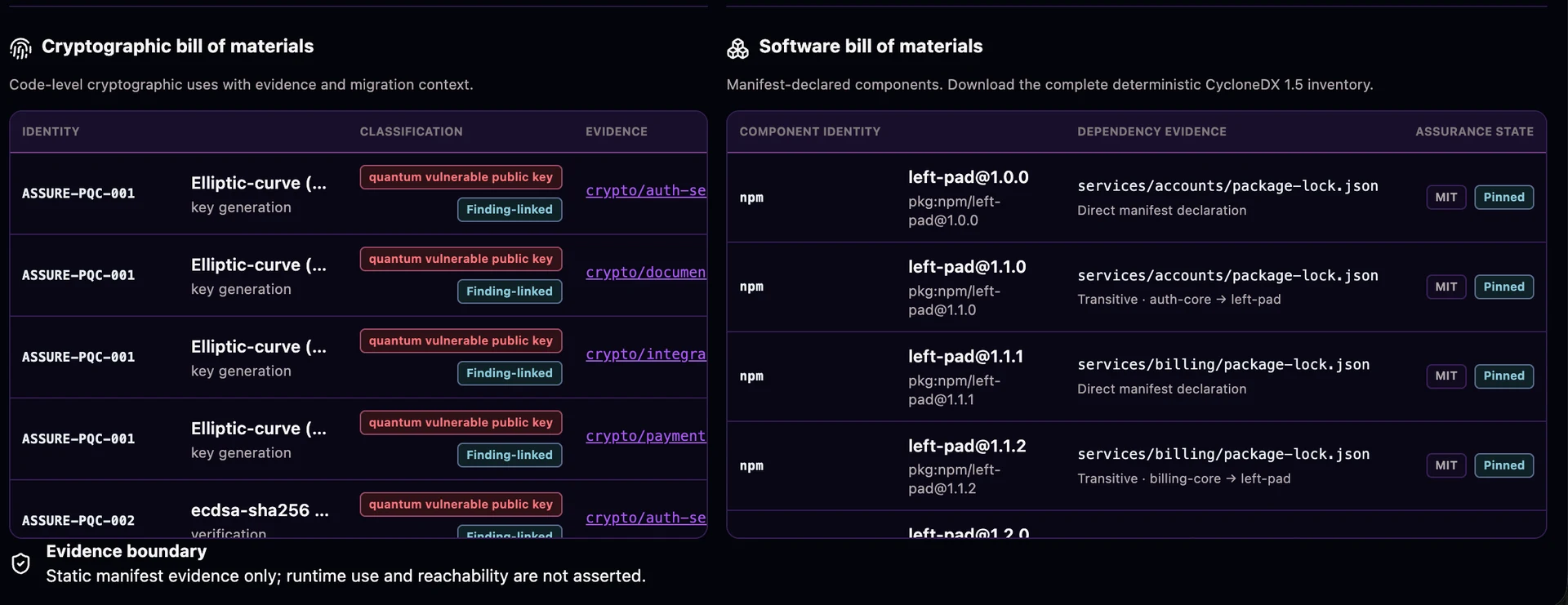
Provenance / Software & cryptography
Review software components and cryptographic uses beside their source evidence.
  • 01Source-linked findings and validation
  • 02Software and cryptographic bills of materials
  • 03Evidence for post-quantum readiness
03 Breakwater Response

Investigate with AI. Authorize with confidence.

Use AI reasoning roles to challenge the explanation and prepare a response proposal. Review the target, expected impact and recovery plan, then define the evidence needed to verify the outcome.

Explore Response →
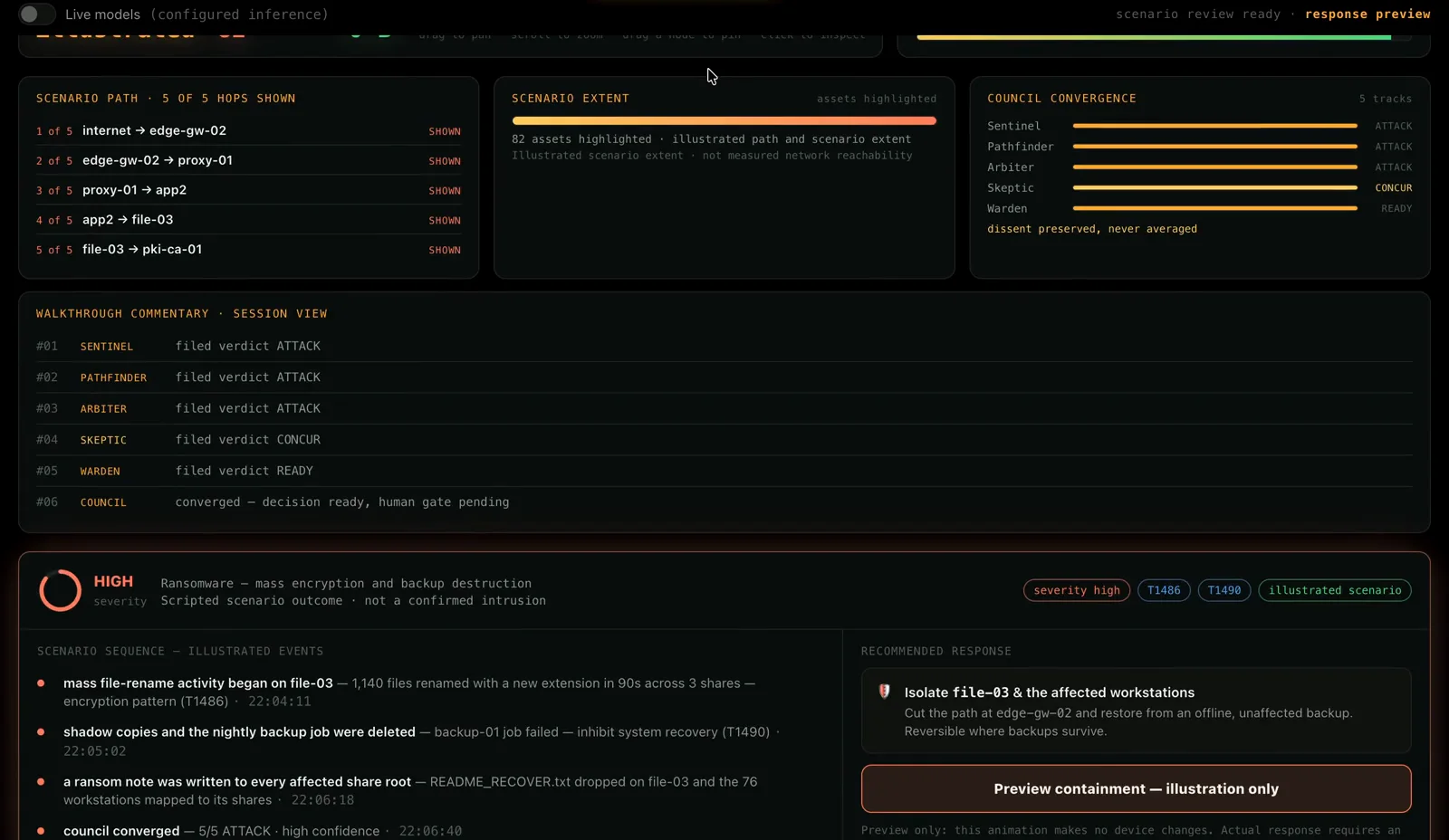
Response / Decision review
Review the reasoning and proposed action at the human authorization gate.
  • 01Multi-role AI investigation
  • 02Response scope, rehearsal and recovery
  • 03Human authorization and outcome review
Enterprise operating conditions

Establish the handoffs
across your security workflow.

01

Connect the inputs

Identify which observations come from Discover, which source findings come from Provenance and which records your existing tools supply.

02

Map the relationships

Agree how asset identities, services and repositories correspond. Keep source and collection context available as evidence moves into an investigation.

03

Assign the action owners

Name who reviews the Council’s proposal, who carries out an approved change and who gathers the evidence needed to verify its outcome.

Platform resources

Review the platform scope and workflows.

ASOC platform overview

The platform story, three products and a focused evaluation approach.

Read platform overview (PDF) →Plan the evaluation (PDF) →Browse all resources →
Evaluate ASOC

Evaluate the workflow
around one critical service.

Select a service that spans security and operations. Compare how your team assembles evidence, investigates the risk and reaches an authorized proposal today with the ASOC workflow.

Read the platform brief (PDF) →

What your evaluation should establish

  • An agreed operational question and evidence sources.
  • Explicit asset-to-service-to-repository mappings.
  • A reviewable finding or proposal, with an accountable owner.
  • A decision about coverage, operational fit and the next phase.
Evaluation scope and demo details

The workflow illustrates the ASOC operating model. Cross-product handoffs depend on explicit mappings and configured integrations. Product views use demonstration data; execution responsibilities and verification steps are agreed for the selected deployment.