Evidence-based asset discovery
Build a durable inventory from authorized local observations, imports and named runs while keeping coverage gaps visible.

DiscoverAsset, connectivity & exposure intelligence
Build an evidence-backed view of connected assets, services and exposure, then identify plausible attack paths across IT, OT and IoT before deciding where to intervene.
Designed for on-site intelligence with tenant-local collection. Candidate identities, vulnerabilities and paths retain their evidence state and assumptions.
External entry maintenance jump host safety relay PLC
8 seconds · silent · replay anytime
Where can exposure reach operations?
Asset inventories and vulnerability scanners identify important facts. Discover connects those facts to reachability, operational context and the paths an adversary may use.
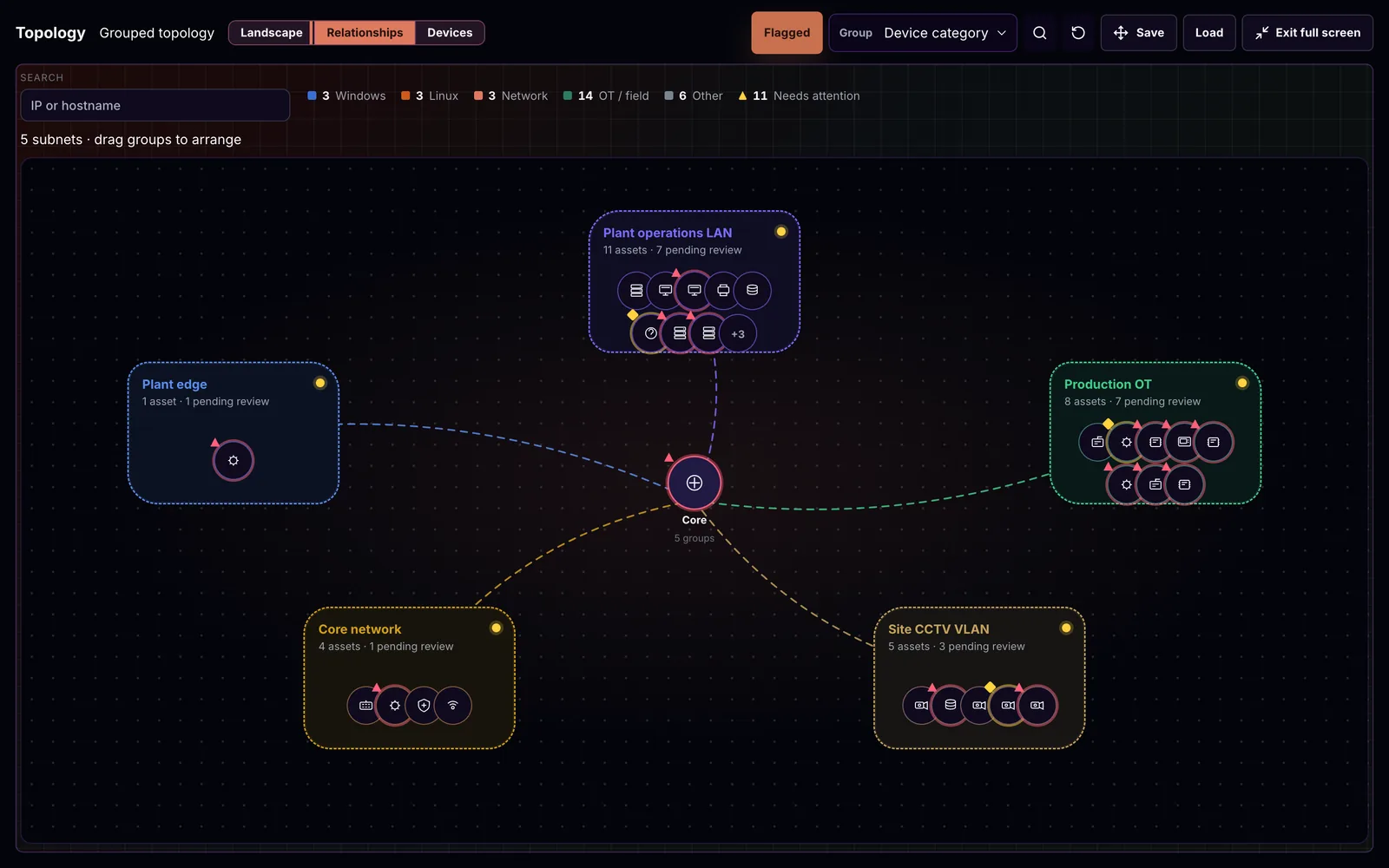
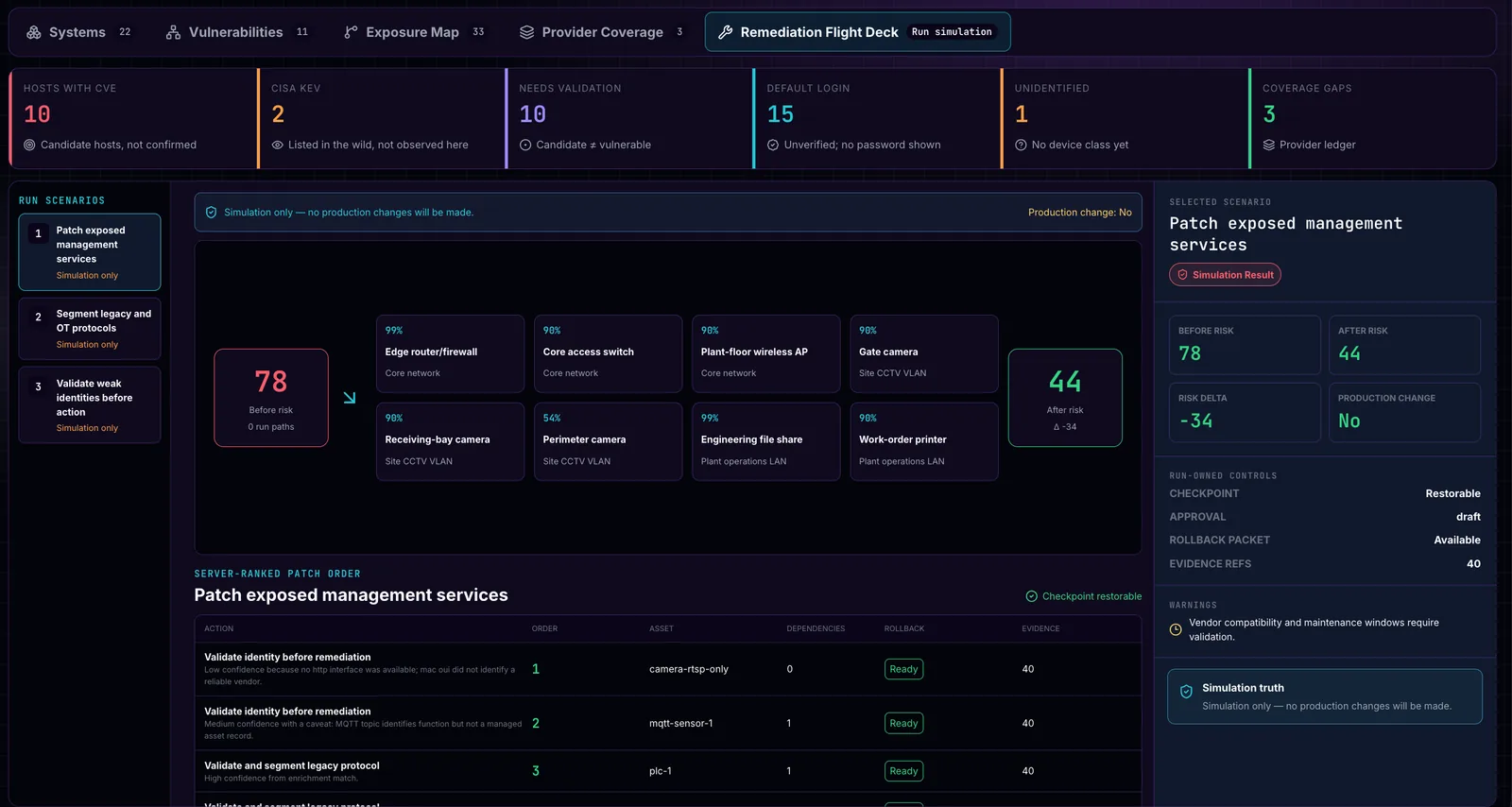
Discover combines inventory, connectivity, service and exposure evidence in one model. A candidate path shows which assumptions create a route to a protected asset, the evidence behind each hop, and the control points that may break the path.
Severity alone does not show whether an exposed service can participate in a route to a critical system. Discover connects the finding to the assets and network relationships around it.
Each route is a candidate to validate. Reachability does not prove exploitation, vulnerability applicability or compromise. It focuses the next evidence request and gives technical and business teams a shared object to review.
Attack-path identification is integrated with discovery, exposure analysis and rehearsal instead of being a disconnected graph built from a separate inventory.
Discover preserves the distinction between what the environment reported, what the platform inferred and what still needs a human decision.
Build a durable inventory from authorized local observations, imports and named runs while keeping coverage gaps visible.
Connect protocol evidence, services, confidence reasoning and candidate product identity without presenting a guess as confirmation.
Keep provider coverage, freshness, candidate state and validation decisions attached to vulnerability findings.
Trace candidate routes across accepted asset and connectivity evidence, with assumptions and supporting records available for review.
Explore a modeled change, checkpoint and rollback plan against a sealed simulation lineage before customer systems are touched.
Inventory observed cryptographic use, unknown dependencies and ownership gaps to frame post-quantum transition work.
Use one site, one operational question and one named evidence set. Expand only after the team agrees what the first evaluation established.
Name the site, data boundary, collection method and systems that must remain untouched.
Review asset identity, service posture, confidence and provider coverage from an authorized source.
Connect exposure to reachability and identify the assumptions that need validation.
Compare interruption options, preserve rollback notes and hand a bounded proposal to the responsible team.
These product views show different parts of the same evidence chain. The full-screen controls preserve enough detail for technical review.
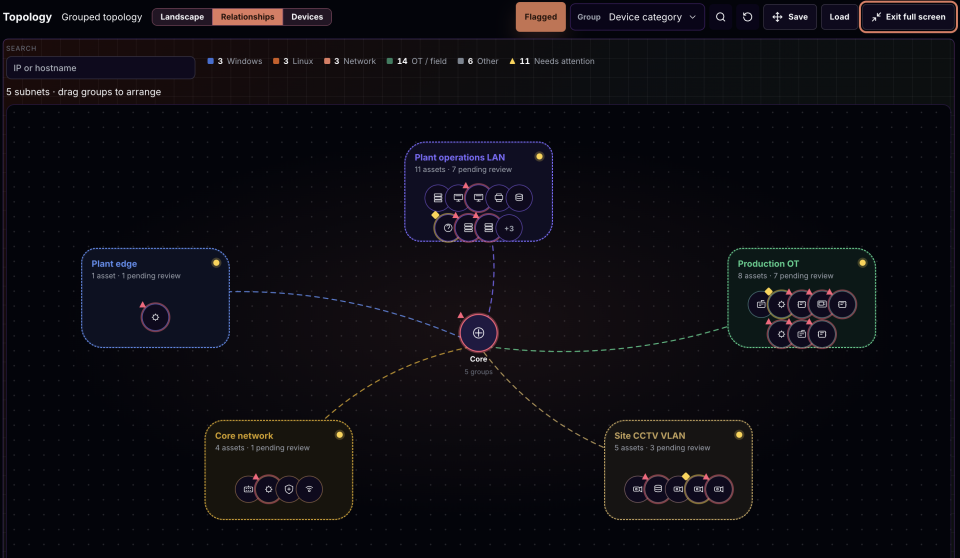
Actual product capture · Topology
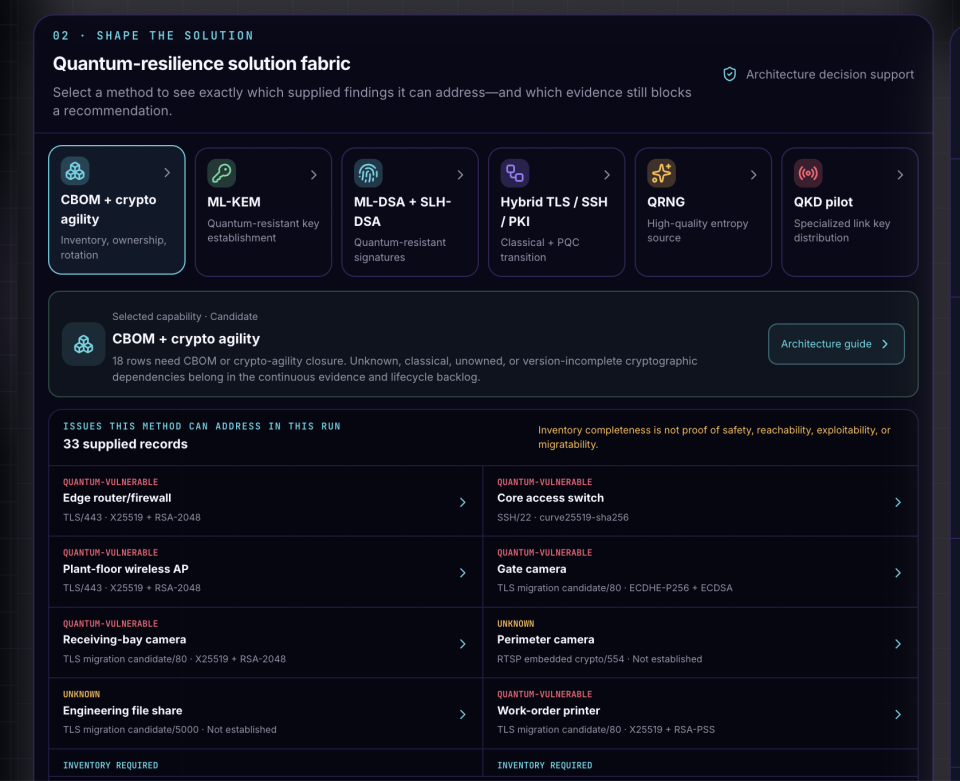
Actual product capture · Supplied findings
Discover adds evidence-backed identity, exposure context, attack-path analysis and rehearsal between raw tools and an authorized operational change.
A read-only MCP endpoint lets approved clients query Breakwater evidence without granting response authority. OAuth identity and explicit scopes keep access bounded and attributable.
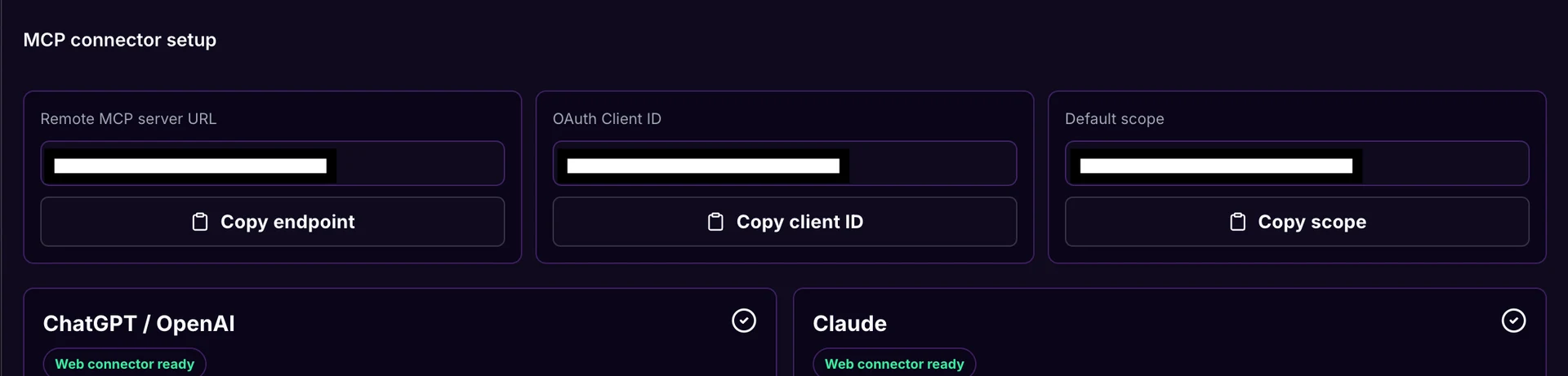
Actual product capture · Sensitive values redacted
Use network detection as a source. Discover focuses on what exists, how it connects and which exposure deserves the next investigation.
Preserve scanner coverage and candidate state, then add asset relationships and attack-path context to prioritization.
Add security identity, service evidence, uncertainty and run lineage without treating the platform as a generic system of record.
Prepare bounded, evidence-linked decisions and proposals that can feed operations without silently executing changes.
Discover is designed for security work where an unsupported conclusion can create operational risk.
Choose one site or bounded asset group and one decision: an unexplained exposure, a route to a critical asset, a coverage gap or a cryptographic transition question.
No. It can use authorized provider results and imports while preserving provider state, coverage and validation context. Existing sensors and enforcement tools remain part of the environment.
No. The path describes plausible reachability under stated evidence and assumptions. Observed activity, vulnerability applicability and exploitation require separate evidence.
Discover is designed for on-site use with local processing and tenant-local collectors. Validate the selected release's air-gap, offline-update, storage, identity and recovery controls for the intended deployment.
Discover establishes what is connected and exposed. Provenance tests the support behind a finding. Response governs the next step and verifies the outcome.
Tell us which systems you need to understand, what evidence already exists and which decisions are currently difficult to defend.