Exact source context
Open the cited source in context and retain content identity so a later review can tell whether the evidence changed.

ProvenanceEvidence, validation & provenance
Trace each finding to exact source, replay the evidence independently, expose counter-evidence and preserve who decided what happens next.
Provenance keeps the evidence behind a finding inspectable. Detection, validation, human review and remediation state remain distinct.
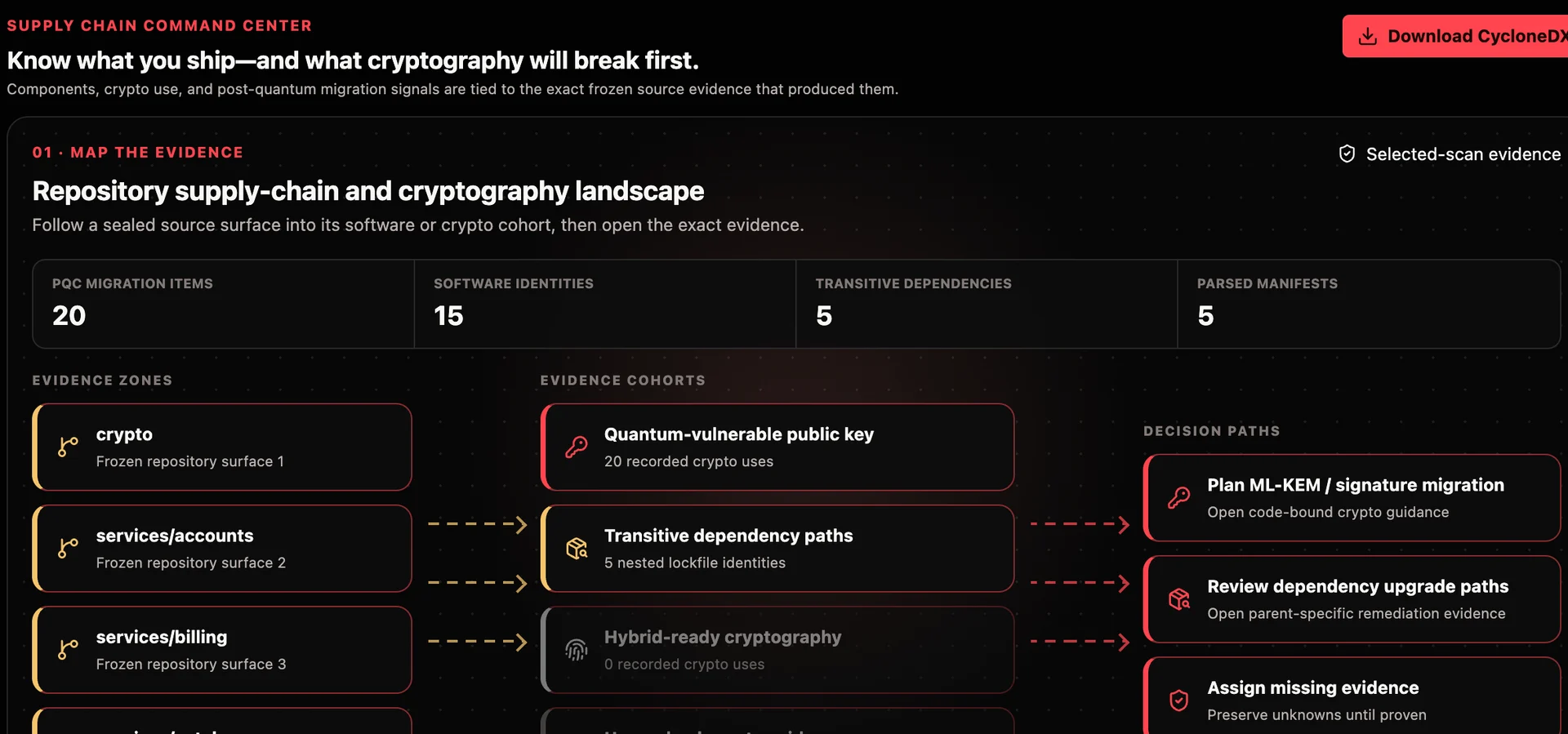
Actual product capture · Sanitized project
What evidence makes the finding defensible?
Most application security workflows preserve the alert and lose the reasoning. Provenance keeps the exact source, independent replay, challenge history and accountable decision together.
Provenance moves beyond a scanner result by binding the finding to the source it cites, replaying the evidence, exposing challenge state and retaining the human decision that follows.
Provenance brings source analysis, dependency intelligence, validation and remediation review into one inspectable chain.
Open the cited source in context and retain content identity so a later review can tell whether the evidence changed.
Replay findings against frozen evidence and fail closed when source, context or required inputs no longer match.
Make the conditions behind a finding visible and preserve evidence that weakens, qualifies or refutes the claim.
Examine direct and transitive dependencies, origin and repository context alongside the findings they influence.
Locate cryptographic use in software and organize the code, dependency and ownership questions that shape migration.
Review a minimal proposed change, prerequisites, verification result, rollback plan and approval state before action.
Selected recorded workflows show how Provenance preserves exact evidence, independent validation, unresolved questions and the human decision boundary.
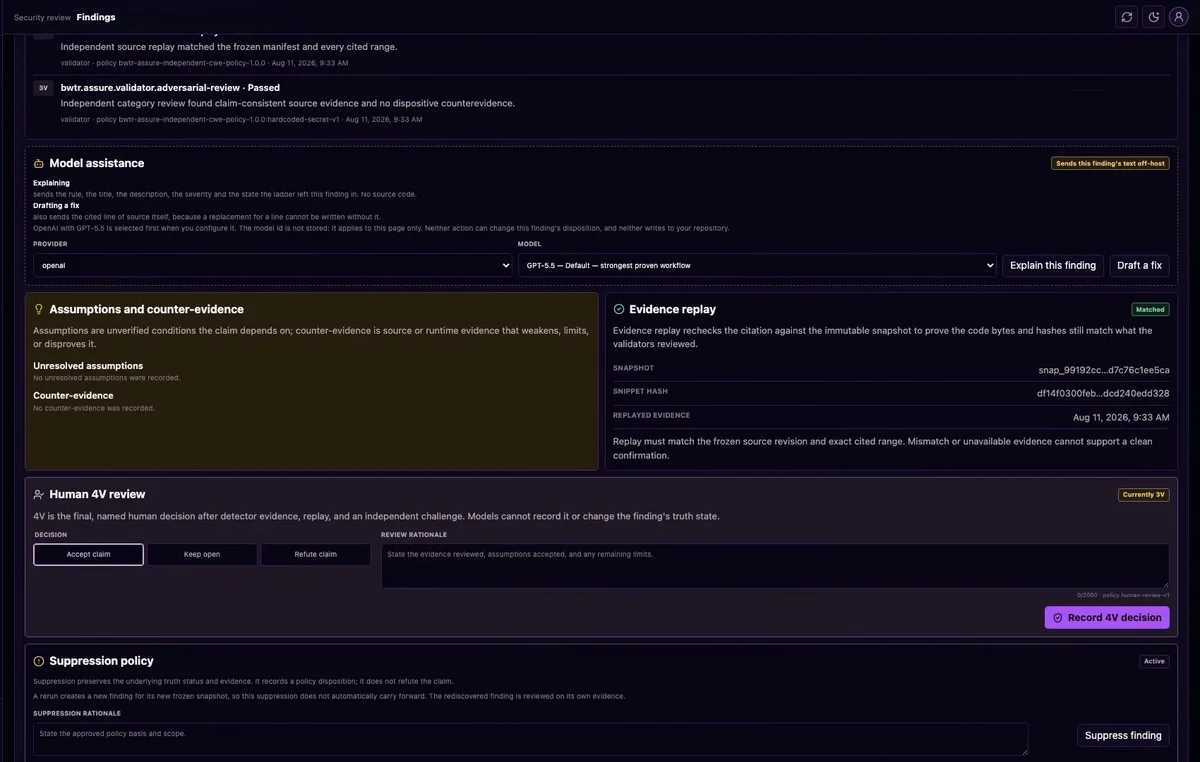
Recheck the frozen source identity and retain assumptions, counter-evidence and replay state before human review.
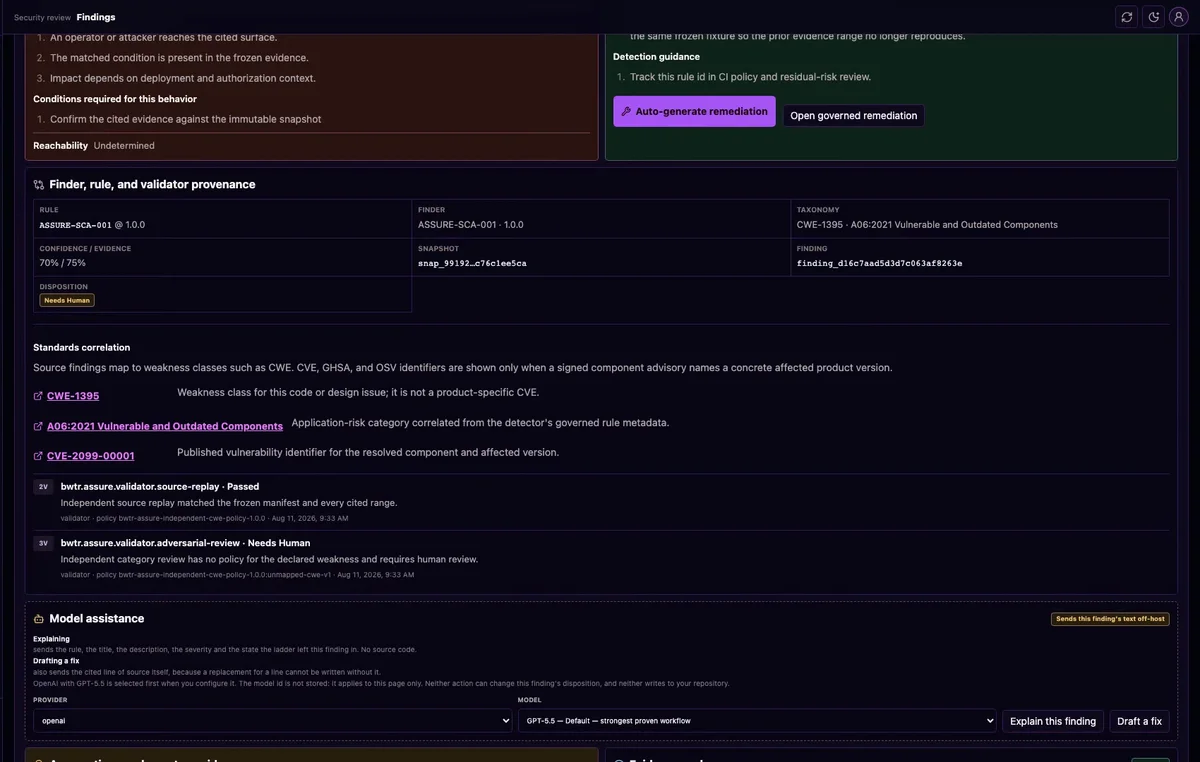
Keep standards correlation, advisory identity and validator state attached without promoting an unresolved match to certainty.
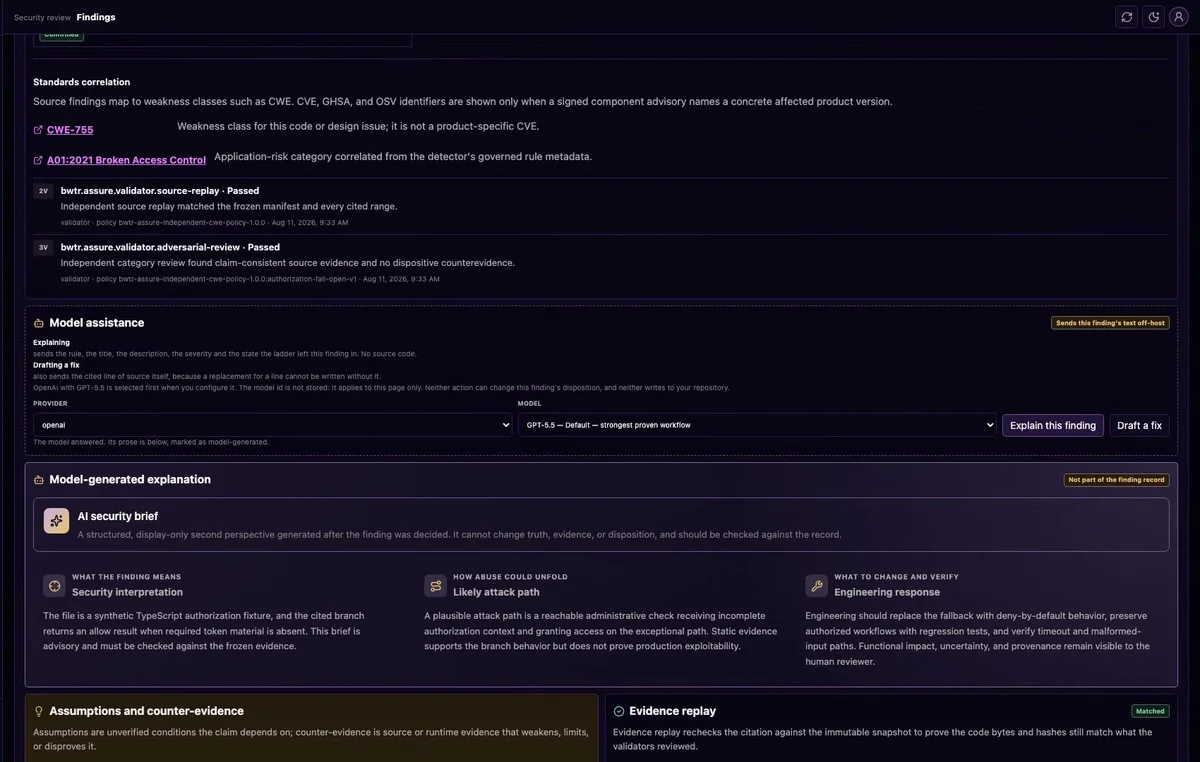
A marked security brief can explain an established finding while the evidence record and human disposition remain outside model control.
Engineering, security and governance teams can examine the same finding at different depths without losing the chain that connects evidence to decision.
Define repository, revision, authorized scope and the exact material the analysis can inspect.
Run the applicable analysis and bind each material claim to evidence that can be replayed.
Review prerequisites, alternative explanations, impact and any counter-evidence before disposition.
Record the decision, remediation proposal, verification result and accountable owner.
Coverage is release-dependent and should be confirmed during evaluation. The value is the consistent record around each result: source, scope, evidence, replay, challenge and decision.
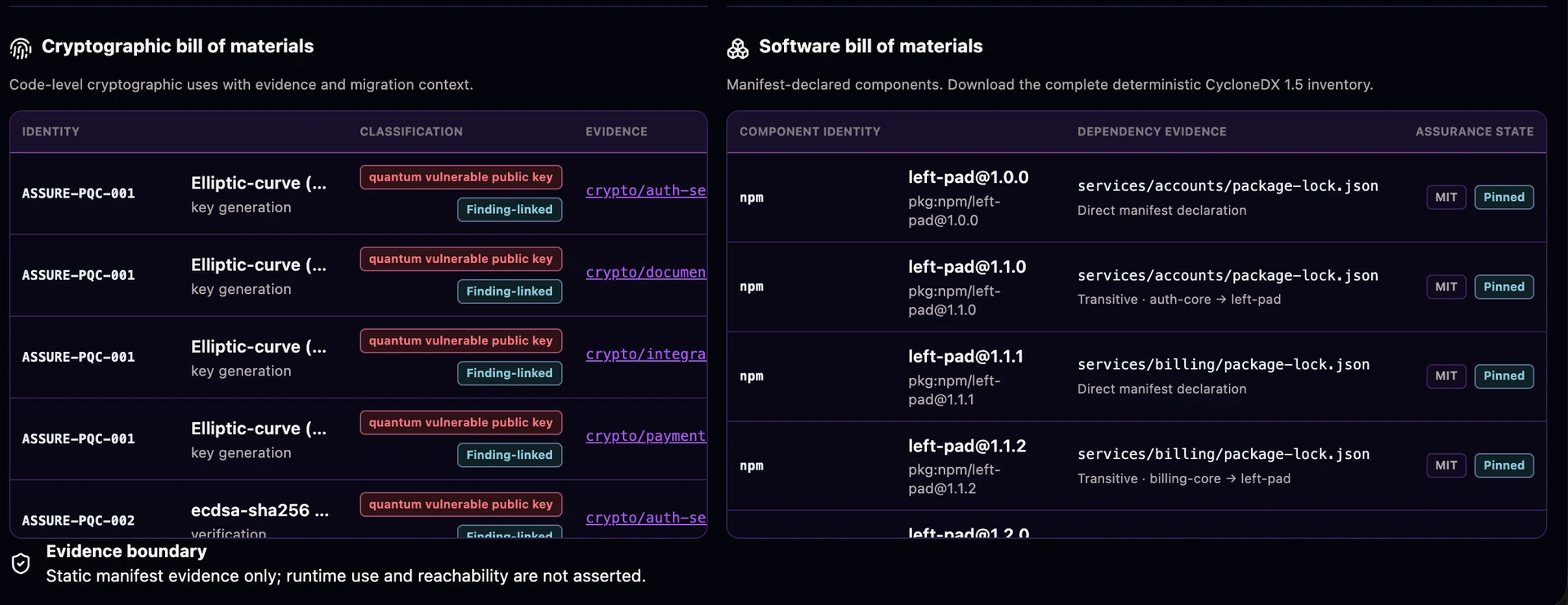
Actual product capture · Demonstration data · Evidence boundary shown
Review application code, open-source components, secrets and infrastructure definitions with the cited source available.
Carry container and configuration findings into the same validation and decision process.
Keep rules of engagement, target scope and test evidence with results from approved running applications.
Connect cryptographic use in code and dependencies to post-quantum readiness and migration planning.
Provenance complements the tools that find weaknesses. It helps teams determine what the result can support, what still needs review and how to preserve the decision.
Normalize results into a review process that keeps exact source, validation and disposition available after the scan completes.
Give engineers the cited evidence, prerequisites and smallest reviewable change instead of a detached ticket summary.
Preserve who decided, which evidence they reviewed and whether the source changed after the decision.
Use runtime findings as another source of evidence. Provenance does not replace WAF, WAAP, EDR or live traffic enforcement.
A defensible result includes what the current evidence cannot establish.
Choose a repository and a small set of findings that currently require manual reconstruction. Agree how replay, challenge and human disposition will be judged.
It can provide analysis surfaces, but mature suites may offer broader language, IDE, registry and runtime coverage. Evaluate the selected release against your required ecosystems and use Provenance where decision-grade evidence matters.
The evaluation should distinguish deterministic analysis and validation from any optional model assistance. A model response should not silently become a verdict or an authorization.
Remediation is governed and capability-dependent. Review the proposed diff, scope, tests, rollback and approval route. A generated change is not permission to modify a repository.
Discover establishes the connected exposure. Provenance determines what supports the finding. Response governs the operational next step and verifies the result.
Bring a repository, an authorized scope and a result your team needs to defend. We will define what evidence and validation should establish.