Site boundaries
Understand where shared engineering access ends and which relationships still need validation.

Power & utilities / Breakwater ASOC
Breakwater ASOC brings agentic AI investigation to the IT and OT connections around utility operations. Trace candidate attack paths, challenge the evidence and rehearse response options with the teams responsible for continuity of service.
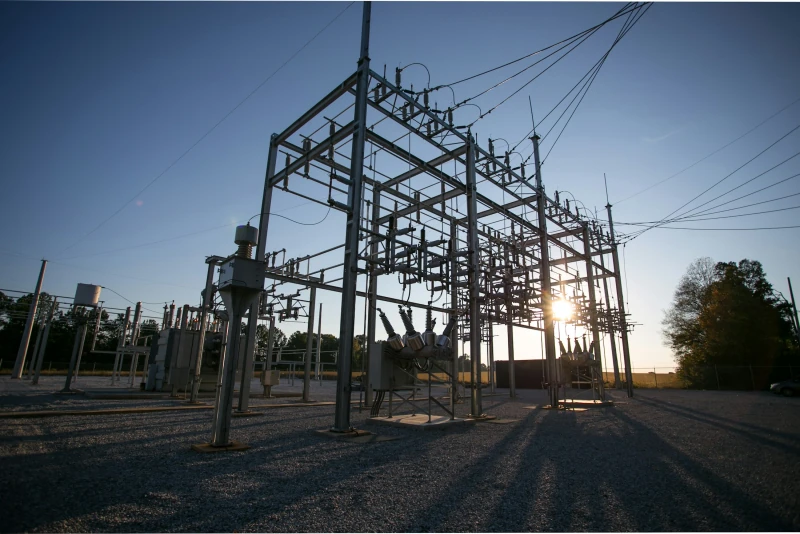
Illustrative evaluation scenario
A maintenance job requires access to equipment at one site. Security and engineering need to establish whether the same connection creates a route beyond the approved work scope.
Operating priorities / Power & utilities
Understand where shared engineering access ends and which relationships still need validation.
Bring software and cryptographic evidence into planning alongside equipment life and operating constraints.
Put control-room, field and engineering responsibilities into the response review.
Discover / Provenance / Response
Discover identifies assets, observed relationships and candidate attack paths for review against the approved site scope.
Provenance links available source, dependency and cryptographic findings to their evidence, supporting remediation and PQC planning.
Response brings the evidence into an AI Council investigation. Compare explanations and rehearse a scoped intervention before engineering approval.
Agentic AI / Power & utilities
The Council examines a cross-site access hypothesis against supplied evidence and the engineering work scope.
Ask whether the observed relationships support the route. Preserve uncertainty where reachability depends on a stale record or an unverified connection.
Rehearse a modeled change to the selected relationship. Identify which job requirements, dependencies and recovery assumptions engineering must validate.
The utility’s accountable owners decide whether to proceed, when work is permitted and what fresh evidence will confirm the intended result.
Decision & evaluation criteria
Trace one engineering-access question from observations to a reviewed decision. Have the utility’s engineering team challenge the route assumptions and assess the proposed change against the job scope.
See the evaluation approach →Next steps
Bring a site, a defined maintenance job and the engineering owner. Evaluate how ASOC connects the access evidence to a response the utility can review.